From the book: 'The Success of Internal Branding' by Marc van Eck, Ellen Leenhouts, and Linda Rutten
Why
Conviction
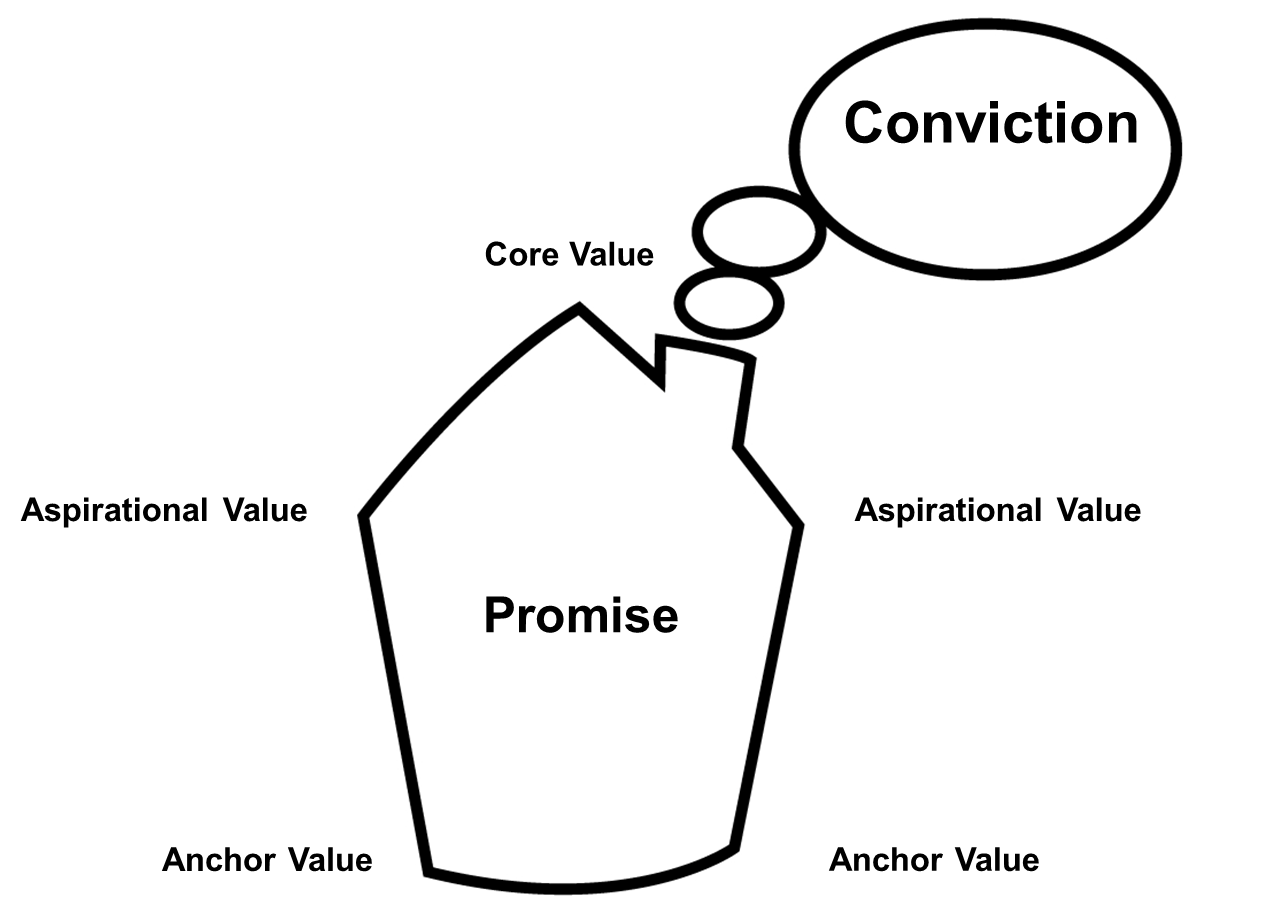
Conviction is the 'why' of the brand house. It describes why the organization exists; the higher purpose of the organization. It indicates why the organization undertakes activities. Conviction is socially relevant, but it can also be debated. So, it inspires some but not everyone. Conviction is never so general that it becomes brandless. The conviction reflects the character that the brand inherently possesses. It is also never so specific that it becomes function or category-bound.
What
Brand Promise
The brand promise describes the 'what' of the brand house. This is not the functional 'what' but the emotional 'what'. The promise is about what the organization offers to the (internal) customer. What does the brand evoke in customers? The brand promise emotionally appeals to customers and also internally guides the 'what' of the organization. The promise strongly influences the services (including innovation) developed by the brand and offered to the customer. Additionally, (an element of) the promise is conveyed in communication and the tagline, with or without a suitable proposition.
How
Brand Values
The brand values describe the 'how' of the brand house. The brand values are the compass for the organization but not the GPS with specific coordinates. They provide direction while offering space simultaneously. The brand house consists of five brand values: two anchor values, two aspiration values, and one self-value. They guide how the organization does things.
Anchor values
The anchor values are embedded in the organization's DNA. They represent where you come from. However, effort must be continuously invested to maintain them. Anchor values are often broadly defined.
Self-value
The self-value most accurately represents how the organization does things.
Aspiration values
Aspiration values complete the whole picture. These are values that potentially exist within the organization. You need to work a bit harder to make them visible. Aspiration values guide the movement the organization wants to make and keep the other values in check so that the brand doesn't veer off course by exaggerating its strong values.
If an organization consistently lives up to its values in everything it does (communication, symbols, systems/processes, products, and behavior), customers recognize the organization by its values. This is the ultimate litmus test.